jvmguard architecture
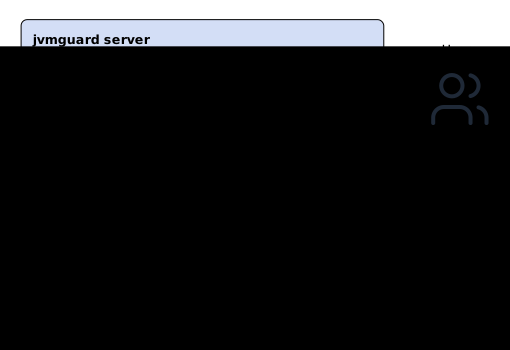
jvmguard consists of two main parts: the server and the agent. The agent is loaded in the monitored VM and records data. The agent connects to a jvmguard server. The server periodically queries all connected agents and processes their data. Historical information is written to a database. Users log in with their web browser to the jvmguard server to analyze the recorded data.
Internally, the jvmguard server consists of three components:
- The collector accepts TCP connections from jvmguard agents in monitored VMs. These connections can be encrypted and authenticated, so they are viable for wide area networks. The collector also consolidates data in the database, fires triggers and executes their actions.
- The embedded H2 database stores all persistent data, both recorded data and configuration, in a single database file called “jvmguard”.
- The UI server accepts HTTP or HTTPS connections where users can log in, view and analyze the collected data and configure the server.